Live Batches
Book Session
Menu
Curriculum
Account
Login / Sign Up
Live instructor-led

Java Microservices Certification Training

Join our Java Microservices course with certification. Learn Spring Boot, Docker, and Kubernetes with hands-on training to build cloud-native applications. ✔️Real-Time Projects, ✔️100% Satisfaction Guaranteed✔️Project-based Training✔️

Talk to a counsellor Watch preview

12
live sessions
4
modules
95
lessons
Bhawna Gunwani
Your mentor Bhawna Gunwani Corporate Trainer
12 live sessionsinstructor-led 4-module programstructured path Certificateon completion

Tools and Technologies Covered

Java
REST API
JWT Token
Spring Boot
AWS
API Gateway
Microservices
Docker
Kubernetes
Kafka
Git
AWS Pipelines

Java Microservices Course Key Features

6 Weeks of Intensive Live Training

Interactive sessions with real-time problem solving

Learn from Industry Experts

Training by globally recognized experts

Build Food Delivery Website

Hands-on project for your portfolio

Hands-On Labs

Practice real scenarios with guided, interactive labs

Interview Q&A

Frequently asked interview questions with clear answers

Quick Notes

Concise revision notes for fast and effective learning

Why Learn Java Microservices?

  1. Build Cloud-Native Applications: Microservices power 85% of modern cloud-based applications, with adoption projected to grow by 2025 (Source: Industry Survey, 2024).
  2. High Demand for Specialists: Java Spring Boot Microservices developer roles have seen 30%+ annual growth in India and globally, with a shortage of qualified professionals (Source: Tech Hiring Report, 2024).
  3. Future-Proof Your Career: Java, combined with Spring Boot and Spring Cloud, is one of the most widely used platforms for building microservices, ensuring relevance in the evolving software development landscape.
  4. Boost Scalability and Efficiency: Java Spring Boot Microservices enable modular, scalable systems, reducing development time by up to 40% compared to monolithic architectures (Source: Cloud Tech Study, 2024).
  5. Leverage Robust Ecosystem: Java’s strong ecosystem with Spring Boot, Docker, Kubernetes, and AWS services streamlines microservices deployment, adopted by 70% of Fortune 500 companies (Source: Enterprise Tech Report, 2024).

Java Microservices Career Scope

Microservice Developer
Microservice Architect
Java Architect
Full-Stack Java Developer
Cloud Transformation Lead
₹14 LPA
Avg package
35%
Avg hike
3,200+
Transitions
80%
Demand
Annual Salaries (₹)
₹30 LPA
Avg package
45%
Avg hike
3,200+
Transitions
75%
Demand
Annual Salaries (₹)
₹22.6 LPA
Avg package
40%
Avg hike
3,200+
Transitions
70%
Demand
Annual Salaries (₹)
₹8.5 LPA
Avg package
38%
Avg hike
3,200+
Transitions
78%
Demand
Annual Salaries (₹)
₹42 LPA
Avg package
80%
Avg hike
6,000+
Transitions
99%
Demand
Annual Salaries (₹)

Course Curriculum

  • 4 modules
  • 95 lessons
  • 12 live sessions
  1. Module 1 Microservices Architecture 24 lessons
    • Introduction
    • Microservices Principles
    • Monolithic vs SOA vs Microservices
    • Microservices Architecture
    • Advantages of Microservices
    • Disadvantages of Microservices
    • Microservices Dev Tools (Spring Boot, Spring Cloud, IntelliJ/Eclipse)
    • Microservices Cloud Deployment with AWS
    • Microservices Orchestration (EKS, ECS, AWS Fargate)
    • Understanding Project Architecture
    • Understanding Database Entities
    • Understanding Project Components
    • Codebase
    • Dependencies
    • Config
    • Backing Services
    • Build, Release, Run
    • Processes
    • Port Binding
    • Concurrency
    • Disposability
    • Dev/Prod Parity
    • Logs
    • Admin Processes
  2. Module 2 Microservices with Java Spring Boot 23 lessons
    • Getting Started with Microservices
    • Setting Up Dev Environment
    • Creating Backend Services Using Spring Boot
    • Testing Backend Services Using Postman
    • Adding Swagger to Spring Boot API
    • Configuring Swagger for Spring Boot
    • Customizing Swagger
    • Swagger UI
    • Testing Swagger Documentation
    • Introduction to API Gateway
    • API Gateway Features
    • Understanding AWS API Gateway
    • Create an API Gateway in AWS
    • Configuring Routing and Mapping Templates
    • Running and Testing Microservices
    • Configuring API Composition
    • Implementing Caching (AWS API Gateway & CloudFront)
    • Authentication and Authorization
    • Load Balancing with AWS ALB/NLB
    • Service Discovery with Spring Cloud Eureka or AWS Cloud Map
    • Configuring Authentication with Spring Security
    • Enabling Cross-Origin Resource Sharing (CORS)
    • JWT/OAuth2 Authentication with AWS Cognito
  3. Module 3 Microservices Patterns 21 lessons
    • Introduction to Patterns for Microservices
    • Decompose by Business Capability
    • Decompose by Subdomain
    • Strangler Pattern
    • API Gateway Pattern
    • Aggregator Pattern
    • Client-Side UI Composition Pattern
    • Database per Service
    • Shared Database
    • CQRS Pattern
    • Transactional Messaging
    • Request/Reply, Message Broker, Event-Driven Styles
    • Using AWS SQS/SNS
    • Implementing Event-Based Communication with Amazon MSK (Kafka) or RabbitMQ on AWS
    • Service-to-Service Messaging with Amazon MQ
    • Distributed Transactions & Saga Pattern
    • Externalized Configuration with AWS Parameter Store/Secrets Manager
    • Service Discovery Pattern
    • Circuit Breaker Pattern (Resilience4j)
    • Log Aggregation with AWS CloudWatch Logs
    • Performance Metrics with AWS X-Ray and CloudWatch
  4. Module 4 Microservices with Docker and AWS EKS 27 lessons
    • What is Docker?
    • Architecture of Docker
    • Docker Images and Containers
    • Docker CLI
    • Storage
    • Networking
    • Services
    • What is Kubernetes?
    • Docker Swarm vs Kubernetes
    • Architecture of Kubernetes
    • Kubectl
    • YAML with Kubernetes
    • Pods and Services
    • Deployments and Replicas
    • Introduction to EKS
    • Create Amazon ECR Repository
    • Create EKS Cluster
    • Deploy Application to EKS
    • Scale Application
    • Update Application
    • Upgrade EKS Cluster
    • Multiple Service Instances per Host
    • Service Instance per Host
    • Service Instance per VM
    • Service Instance per Container
    • Serverless Deployment with AWS Lambda
    • Service Deployment Platforms on AWS
  1. 01 Containers and Container Platforms 0:01:40
  2. 02 Containers and Virtual Machines 0:02:00
  3. 03 Docker Platform 0:02:00
  4. 04 Setting Up Docker 0:01:30
  5. 05 Docker For Developers 0:01:50
  6. 06 Docker Basics 0:02:30
  7. 07 Docker Internals 0:02:15
  8. 08 Docker Build and Docker Engine 0:02:00
  9. 09 Docker Storage 0:01:30
  10. 10 Docker Networking 0:02:30
  11. 11 Introduction to Kubernetes 0:03:20
  12. 12 Docker Swarm vs. Kubernetes 0:01:30
  13. 13 Configure Kubernetes 0:02:15
  14. 14 Yaml 0:01:50
  15. 15 Pods and Services 0:02:20
  16. 16 Introduction to Java Microservices 0:09:00
  17. 17 Spring Boot Fundamentals for Java Microservices 0:06:00
  18. 18 Service Registry & Discovery in Java Microservices 0:08:00
  19. 19 API Gateway in Java Microservices 0:07:00
  20. 20 Load Balancing in Java Microservices 0:05:00
  21. 21 Inter-Service Communication Patterns in Java Microservices 0:05:00
  22. 22 Circuit Breaker & Resilience in Java Microservices 0:10:00
  23. 23 Messaging & Event-Driven Architecture in Java Microservices 0:09:00
  24. 24 Configuration Management in Java Microservices 0:06:00
  25. 25 Observability (Logging, Monitoring & Tracing) in Java Microservices 0:05:30
  26. 26 Security in Java Microservices 0:07:00
  27. 27 Deployment Patterns in Java Microservices 0:06:30
  28. 28 Database Patterns in Java Microservices 0:05:00
  1. 01 Build Spring Boot CRUD API 00:30:00
  2. 02 Docker: Create an image with GIT installed 00:25:00
  3. 03 Kubernetes: Setup Kubernetes Cluster Using Minikube 00:20:00
  4. 04 Docker: Listing and Inspecting Networks 00:15:00
  5. 05 Docker: List network driver plugins 00:15:00
  6. 06 Kubernetes: Create a Simple YAML File 00:15:00
  7. 07 Docker: Create an image with ADD, CMD, ENTRYPOINT, and WORKDIR instructions 00:25:00
  8. 08 Enabling JWT Authentication in Spring Boot 00:30:00
  9. 09 Validation & Exception Handling in Spring Boot 00:30:00
  10. 10 Docker: Create an image with RUN, ARG, & ENV instructions 00:25:00
  11. 11 Kubernetes: Convert JSON to YAML 00:20:00
  12. 12 Docker: Docker Bridge Networking 00:20:00
  13. 13 Kubernetes: Create a Kubernetes Pod using YAML 00:15:00
  14. 14 Docker: Create an image with VOLUME & EXPOSE instructions 00:25:00
  15. 15 Service Discovery using Spring Cloud Eureka 00:30:00
  16. 16 Client-Side Load Balancing with Ribbon 00:30:00
  17. 17 Docker: Create an image with LABEL & ONBUILD instructions 00:20:00
  18. 18 Kubernetes: Deploy a Multi-Container Pod 00:20:00
  19. 19 Docker: Configure NAT for external connectivity 00:20:00
  20. 20 Kubernetes: Create a Service for a Pod 00:20:00
  21. 21 Docker: Create an image with HEALTHCHECK & SHELL instructions 00:20:00
  22. 22 Spring Cloud API Gateway & Service Discovery 00:30:00
  23. 23 Spring Boot Inter-Service Communication 00:30:00
  24. 24 Docker: Create an image with USER instruction 00:20:00
  25. 25 Kubernetes: Creating Image & Pod for ASP.NET Core Application 00:20:00
  26. 26 Kubernetes: Creating Pod and Service for Database 00:20:00
  27. 27 Docker: Creating a Private Local Docker Registry using Play with Docker 00:20:00
  28. 28 Async Messaging with Spring Cloud Stream 00:30:00
  29. 29 Distributed Tracing with Zipkin 00:30:00
  30. 30 Docker: Managing volumes through Docker CLI 00:15:00
  31. 31 Kubernetes: Deploy ASP.NET Core Application with Database 00:25:00
  32. 32 Docker: Creating Volume Mount from docker run command & sharing same Volume Mounts among multiple containers 00:15:00
  33. 33 Microservices Security with Spring Security 00:30:00
  34. 34 Spring Cloud Stream & RabbitMQ Events 00:30:00
  35. 35 Monitoring Spring Boot Apps with Prometheus 00:30:00
  36. 36 Centralized Logging with the ELK Stack 00:30:00
  37. 37 CQRS Pattern in Spring Boot 00:30:00
  38. 38 Docker: Test Network Connectivity 00:15:00
  39. 39 Deploy Spring Boot Microservices on AWS EC2 00:30:00

Real World Project: eShopFlix

Building a complete E-commerce project like the one you've described involves multiple steps. Below is a simplified outline of the project structure and key components. Please note that this is a high-level overview, and you may need to add more details based on your specific requirements and features.

Project Scope

Public Section

  1. Home Page
  2. About Us Page
  3. Contact Us Page

Account

  1. Login Page
  2. SignUp Page
  3. Forgot Password Page
  4. SignOut Page

Items

  1. Item Listing Page
  2. Add to Cart Option

Cart and Payment

  1. Cart Page
  2. Checkout Page
  3. Payment Page with payment gateway integration
  4. Payment Confirmation Page

User Module

  1. Dashboard Page
  2. Order Listing Page
  3. Order Details Page
  4. Profile Page
  5. Change Password Page

Admin Module

  1. Dashboard Page
  2. Item Listing, Create and Edit Pages
  3. User Listing Page
  4. Profile Page
  5. Change Password Page

Technologies Used

  1. Java 21
  2. Spring Boot 3
  3. Spring Data JPA
  4. MySQL / PostgreSQL
  5. Thymeleaf / React (Frontend)
  6. Bootstrap 5
  7. jQuery

Architecture and Practices

  1. Microservices Architecture
  2. Repository Pattern, Dependency Injection
  3. Authentication and Authorization
  4. Responsive and Mobile-Friendly UI
  5. Bundling and Minification
  6. Caching
  7. Error Logging
  8. Deployment to AWS (EC2, RDS, S3, Elastic Beanstalk, CloudFront)

Intended Audience

  1. Java Developers
  2. Senior Java Developers
  3. Java Tech Leads
  4. Java Solution Architects

Outcome of the Project

Create what was once thought impossible. Project development allows you to bring your learning into reality to solve real-world problems. It will give you an invaluable edge in a competitive job market, allowing you to confidently showcase your real-world problem-solving abilities to potential employers to get hired.

  1. 01 Introduction to Java Microservices 15 questions
  2. 02 Introduction to Containers & Docker 15 questions
  3. 03 Docker Fundamentals 15 questions
  4. 04 Docker Storage & Networking 15 questions
  5. 05 Decomposition and Integration Patterns in Java Microservices 15 questions
  6. 06 Communication Patterns in Java Microservices 15 questions
  7. 07 Getting Started with Kubernetes 15 questions
  8. 08 Database Patterns in Java Microservices 15 questions
  9. 09 Cross-Cutting Concerns and Observability Patterns in Java Microservices 15 questions
  10. 10 Deployment Patterns and Automation in Java Microservices 15 questions
  11. 11 Introduction to Containers & Docker 15 questions
  12. 12 Docker Fundamentals 15 questions
  13. 13 Docker Storage & Networking 15 questions
  14. 14 Getting Started with Kubernetes 15 questions
  1. Q&A guideIntroduction to Java Microservices 3 questions
    • Introduction to Microservices 0:24:00
    • Microservice Architecture Fundamentals 0:21:00
    • Setting Up Development Environment 0:23:00
  2. Q&A guideDecomposition and Integration Patterns in Java Microservices 1 questions
    • Building Microservices with Spring Boot 0:25:00
  3. Q&A guideCommunication Patterns in Java Microservices 6 questions
    • Service Communication 0:22:00
    • Service Discovery & Registry 0:24:00
    • API Gateway 0:21:00
    • Reactive Microservices 0:25:00
    • API Versioning & GraphQL 0:24:00
    • Event-Driven Microservices 0:20:00
  4. Q&A guideCross-Cutting Concerns and Observability Patterns in Java Microservices 6 questions
    • Configuration Management 0:20:00
    • Security in Microservices 0:25:00
    • Resilience & Fault Tolerance 0:23:00
    • Observability in Java Microservices 0:24:00
    • Testing Microservices 0:21:00
    • Service Mesh 0:25:00
  5. Q&A guideDeployment Patterns and Automation in Java Microservices 1 questions
    • CI/CD for Microservices 0:25:00
  6. Q&A guideDatabase Patterns in Java Microservices 1 questions
    • Database Design in Microservices 0:24:00
  7. Q&A guideIntroduction to Containers and Docker 4 questions
    • Evolution of Computing and Containers 2:00:00
    • Docker Platform 2:00:00
    • Understanding Namespaces and Control Groups 0:20:00
    • Containerization with Docker 0:24:00
  8. Q&A guideDocker Fundamentals 10 questions
    • Docker Images with Dockerfile 0:15:00
    • Managing Container Lifecycle: Run, Stop, Inspect 0:10:00
    • Docker Fundamentals 2:00:00
    • Docker Compose 0:20:00
    • Docker Internals 2:00:00
    • Docker Security Best Practices 0:20:00
    • Scanning Images for Vulnerabilities 0:10:00
    • Docker Registry and Docker Hub 2:00:00
    • Integrating Docker into CI/CD Pipelines 0:13:00
    • Inspecting and Debugging Docker Containers 0:10:00
  9. Q&A guideDocker Storage and Networking 3 questions
    • Docker Storage 2:00:00
    • Docker Networking 2:00:00
    • Advanced Docker Networking with Overlay Networks 0:12:00
  10. Q&A guideGetting Started with Kubernetes 10 questions
    • Introduction to Docker Swarm and Basic Orchestration 0:15:00
    • Introduction to Kubernetes 2:00:00
    • Deploying Containers with Jenkins or GitHub Actions 0:15:00
    • Configure Kubernetes 2:00:00
    • Pods and Services in Kubernetes 2:00:00
    • Monitoring Docker with Prometheus and Grafana 0:15:00
    • Deploying Applications on Kubernetes 2:00:00
    • Containerizing Applications 2:00:00
    • Security and Monitoring 2:00:00
    • Orchestration with Kubernetes 0:23:00

Java Microservices Course Eligibility

Pre-requisites

The learner should have an understanding of Spring Boot to build web applications and REST APIs using Java and MySQL.

Who can Join?

This Java Microservices Training course is recommended for all Java Beginners/Professionals who are interested in creating cutting-edge web apps with AWS microservice architecture.

OUR ALUMNI WORK AT

Trusted by learners whose careers now thrive at leading companies

Choose Training Options

32% OFF
Live Training

Live, expert-led classes mapped to your certification.

₹19,222 ₹12,999
12 months access to the course
What you get
Live Sessions 12
Projects 1
Skill Tests 14
30% OFF
Corporate Training

Tailored team training for your organization.

₹28,570 ₹19,999
Minimum 5 users
Includes
Live Sessions
Custom Content
Flexible Schedule
Labs & Tests
Real Projects
24x7 LMS Access
Trusted by 2,00,000+ Thought Developers, Tech Leads and Architects

Java Microservices Certification

The Java Microservices Certification validates your expertise in building, deploying, and managing microservices using Java, Spring Boot, and AWS. It demonstrates your ability to work with Docker, Kubernetes, REST APIs, and microservice architecture principles for cloud-native applications.

This course is ideal for:

  • Software Developers working with Java or Kotlin
  • Backend Engineers looking to master microservices with Spring Boot
  • DevOps Professionals expanding into Java-based cloud-native systems
  • Architects designing scalable applications on AWS

Yes. Upon successful completion of the course and final project, you will receive an industry-recognized Java Microservices Certification from ScholarHat, which you can share on LinkedIn and in your resume.

This certification opens doors to roles like:

  • Java Microservices Developer
  • Spring Boot Cloud Developer
  • Software Architect – Microservices
  • DevOps Engineer with Java & AWS specialization

Yes, our certification is trusted by leading tech employers. The course is designed with industry experts to align with current hiring needs in microservices architecture, cloud-native development, and AWS-based deployments using Java and Spring Boot.
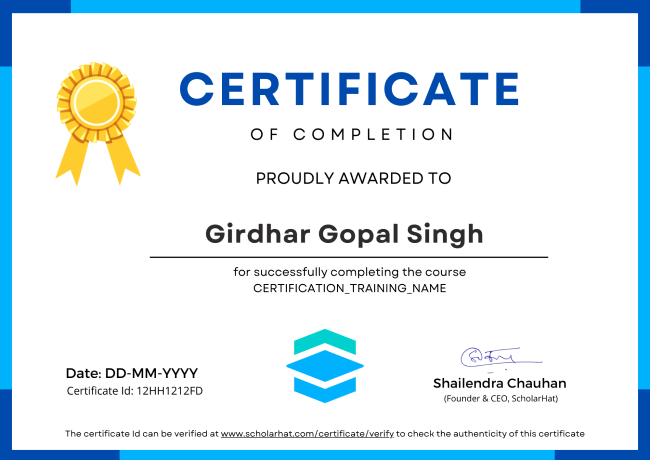

Verifiable Credential Java Microservices Certification certificate

Course Mentors

Bhawna Gunwani

Bhawna Gunwani

Corporate Trainer

15+ Years Technical & Corporate Training
Expert in Microsoft Tech, React, Angular & Node
Global Training: TCS, Infosys, Accenture & More
Vishwanathan Narayanan (VNN)

Vishwanathan Narayanan (VNN)

Mentor & Solution Architect

20 Years Solution Architecture Excellence
Expert in Java, Spring Boot & AWS Cloud
Cloud-Native Microservices Architect

Frequently Asked Questions

Q1. What is the Java Microservices course about?
The Java microservices course is designed to help developers learn how to design, build, and deploy scalable microservices applications using Java, Spring Boot, and cloud-native tools.
Q2. Who should take this Java Microservices certification?
This Java microservices certification is ideal for Java developers, backend engineers, architects, and IT professionals who want to gain hands-on experience with microservices architecture.
Q3. What skills will I gain from this Java microservices training?
By completing this Java microservices training, you’ll master service discovery, API gateway, Spring Cloud, containerization with Docker, orchestration with Kubernetes, and integrating microservices with CI/CD pipelines.
Q4. Do I need prior Java experience for this course?
Yes, a solid foundation in core Java and basic knowledge of Spring is recommended before enrolling in the microservices certification Java program.
Q5. Will I receive a certificate after completing the Java microservices course?
Yes. Upon successful completion, you’ll receive a recognized Java microservices certification, validating your expertise in building and deploying microservices using Java.
Q6. How is this Java microservices training delivered?
The Java microservices training is delivered online with live instructor-led classes, hands-on projects, and real-world case studies to help you gain practical experience.
Q7. Does this course cover tools like Docker and Kubernetes?
Absolutely. The Java microservices course includes containerization with Docker, orchestration with Kubernetes, and cloud deployment, ensuring you’re industry-ready.
Q8. Can this Java microservices certification help in career growth?
Yes. Completing a microservices certification in Java can open up opportunities for roles such as Senior Java Developer, Microservices Architect, or Cloud-Native Engineer.
Q9. What kind of projects will I work on during the Java microservices course?
You will work on real-world projects such as building RESTful APIs, implementing microservices with Spring Boot, managing distributed transactions, and deploying applications to the cloud.
Q10. How does this Java microservices certification differ from other training programs?
Unlike generic courses, this Java microservices certification provides a project-driven approach, practical assignments, and mentorship to help you apply skills directly in workplace scenarios.
Q1. What is the Azure AI Cloud Sandbox?
The Azure AI Cloud Sandbox is a secure, isolated environment that lets you practice and experiment with Azure AI services without affecting production resources. It provides hands-on access to real Azure AI capabilities in a risk-free setup.
Q2. Can I Attend a Demo Session before Enrolment?
Yes, you can Attend a Demo Session before Enrolment in angular certification course. It gives you the opportunity to assess whether the training program aligns with your learning objectives. So, don't hesitate! Take advantage of this opportunity and attend a demo session before making your decision.
Q3. Can I request for a support session if I need to better understand the topics?
Yes, of course you can request for a support session if you need to better understand the topics. For that, you need to be in touch with the counsellor. Contact on +91- 999 9123 502 or you can mail us at hello@scholarhat.com
Q4. Who are your mentors?
All our mentors are highly qualified and experience professionals. All have at least 8-10 yrs of development experience in various technologies and are trained by ScholarHat to deliver interactive training to the participants.
Q5. What If I miss my online training class?
All online training classes are recorded. You will get the recorded sessions so that you can watch the online classes when you want. Also, you can join other class to do your missing classes.
Q6. Can I share my course with someone else?
In short, no. Check our licensing that you agree to by using ScholarHat LMS. We track this stuff, any abuse of copyright is taken seriously. Thanks for your understanding on this one.
Q7. Do you provide any course material or live session videos?
Yes we do. You will get access to the entire content including class videos, mockups, and assignments through LMS.
Q8. Do you provide training on latest technology version?
Yes we do. As the technology upgrades we do update our content and provide your training on latest version of that technology.
Q9. Do you prepare me for the job interview?
Yes, we do. We will discuss all possible technical interview questions and answers during the training program so that you can prepare yourself for interview.
Q10. Will I get placement assistance after receiving my course completion certificate?
Yes, you’ll get placement assistance after receiving your course completion certificate. The placement assistance provided by the US will guide you through the job search process, help you polish your resume, and connect you with potential employers. For that, you need to be in touch with the counsellor. Contact on +91- 999 9123 502 or you can mail us at hello@scholarhat.com
Still have some questions? Let's discuss.
CONTACT US