
























Live Batches
Book Session
Menu
Curriculum
Account
Login / Sign Up

Python For Data Science and AI/ML Certification Training

4.7/5
Google Reviews
4.7/5
ScholarHat Reviews
Watch Course Preview
Course Preview
12 Sessions
Live Classes
54 Videos
Video Course
18 Notes
Quick Notes
12 Labs
Hands-on Labs
11 Tests
Skill Tests
8 Guides
Interview Q&A

Python For Data Science and AI/ML Training Overview

ScholarHat's Python for Data Science and AI Certification Training provides a comprehensive understanding of the Python programming language and its applications in data science and artificial intelligence. Participants learn to develop robust data analysis workflows, predictive models, and AI-powered solutions.

The Python for Data Science and AI Training covers essential concepts like data manipulation, visualization, and machine learning, as well as advanced topics such as deep learning with natural language processing. Hands-on exercises and real-world projects enhance practical skills. This learning path will also teach you how to earn a Data Science and AI certification, helping you stand out from the crowd when applying for roles in this high-demand field.

This best online Python training path will give you a solid foundation in Python programming for data science and AI, preparing you for certification exams and real-world challenges. This course will boost your confidence to work with this rapidly evolving technology.

Python For Data Science and AI Certification Training Objectives

    After this course, attendees will be able to:

    1. Describe Python's Role in Data Science and AI
    2. Master Python Basics and Advanced Concepts
    3. Implement Core Data Science Concepts
    4. Build and Train Machine Learning Models
    5. Work with Data Structures and Algorithms
    6. Leverage AI Frameworks
    7. Understand and Apply Statistical Techniques
    8. Develop End-to-End AI and Data Science Projects

    Why Learn Python For Data Science and AI/ML in 2025?

  1. High Demand Skills: Python is the most sought-after skill in data science and AI job markets.
  2. Versatile Applications: Widely used in data analysis, machine learning, and AI-powered solutions.
  3. Beginner-Friendly: Easy to learn with extensive libraries and community support.
  4. Future-Ready: Powers cutting-edge technologies like deep learning and natural language processing.
  5. Career Boost: Opens doors to high-paying roles in data science, AI, and analytics.
  6. Industry Standard: Preferred language for top companies like Google, Facebook, and Netflix.

  7. Python For Data Science and AI/ML Career Scope in 2025

    Is investing time in learning Python for Data Science and AI/ML a smart career move? Absolutely! Data scientists and AI professionals are among the highest earners in the tech industry. This is because Python is widely used across diverse industries—from startups to large enterprises—for building data-driven solutions and AI-powered applications, providing immense earning potential and career stability.

    1. Python Developer: Build applications, automate tasks, and integrate systems with Python.
    2. Data Scientist: Design predictive models and analyze datasets using Python.
    3. AI/ML Engineer: Build machine learning models and AI solutions with TensorFlow and PyTorch.
    4. Data Analyst: Analyze and visualize data using Python libraries like pandas and Matplotlib.
    5. Backend Developer: Create scalable server-side applications with Django and Flask.

    Python For Data Science and AI/ML Tools and Technologies Covered

    Python
    VS Code
    Jupyter
    Code Debugging
    OOPs
    Numpy
    Pandas
    Matplotlib
    Fast API
    Statistics
    Machine Learning
    AI
    NLP
    ChatGPT
    GitHub Copilot

    Python For Data Science and AI/ML Course Key Features

    10 Weeks of Intensive Live Training

    Interactive sessions with real-time problem solving

    Learn from Microsoft MVPs

    Training by globally recognized experts

    Build Data Science & AI Projects

    Hands-on project for your portfolio

    Hands-On Labs

    Practice real scenarios with guided, interactive labs

    Interview Q&A

    Frequently asked interview questions with clear answers

    Quick Notes

    Concise revision notes for fast and effective learning

    Python For Data Science and AI/ML Course Eligibility

    Pre-requisites

    There are no prerequisites to join the Python For Data Science and AI/ML course. However, having a basic understanding of programming or data concepts can be helpful.

    Who can Join?

      This course is recommended for any students, beginners and freshers interested in creating end-to-end applications.

    1. Students and Beginners: Perfect for those starting their journey in programming or data science.
    2. Freshers in Data Science: Ideal for newcomers interested in data analysis and AI.
    3. Experienced Developers: Diversify your skills with Python to explore data science and AI opportunities.
    4. Data Analysts: Learn Python to enhance your data manipulation and visualization capabilities.
    5. AI/ML Enthusiasts: Build machine learning and AI models with Python’s robust libraries.
    6. IT Professionals: Gain skills in automation and data-driven decision-making with Python.
    7. Entrepreneurs and Innovators: Leverage Python to develop AI-powered and data-driven solutions.
    8. Book a FREE Career Growth Session

      Course Curriculum

      Python Programming Foundations
      • What is Python & Why Python for Data Science
      • Installing Python, Anaconda & VS Code
      • Python Syntax, Variables & Data Types
      • Operators & Expressions
      • Conditional Statements (if, elif, else)
      • Loops (for, while)
      • Functions & Lambda Functions
      • Working with Modules & Packages
      • Exception Handling & Debugging
      • Writing Clean & Readable Python Code
      Python Data Structures & OOPs
      • Lists, Tuples, Sets & Dictionaries
      • Indexing & Slicing
      • List & Dictionary Comprehensions
      • Built-in Functions (map, filter, reduce)
      • String Handling & Formatting
      • File Handling (CSV, TXT, JSON)
      • Introduction to Object-Oriented Programming (OOP)
      • Classes & Objects
      • Methods & Constructors
      • Inheritance (Basics)
      Mathematics & Statistics for Data Science
      • Types of Data (Numerical, Categorical)
      • Mean, Median & Mode
      • Variance & Standard Deviation
      • Percentiles & Quartiles
      • Correlation & Covariance
      • Probability Basics
      • Data Distribution (Normal, Skewed)
      • Why Math & Statistics Matter in AI/ML
      NumPy for Numerical Computing
      • Introduction to NumPy
      • Arrays vs Python Lists
      • Array Creation & Indexing
      • Vectorized Operations
      • Broadcasting
      • Mathematical & Statistical Functions
      • Reshaping & Aggregation
      • Performance Benefits of NumPy
      Pandas for Data Analysis
      • Introduction to Pandas
      • Series & DataFrame
      • Reading Data (CSV, Excel, JSON)
      • Data Inspection & Cleaning
      • Handling Missing Values
      • Filtering, Sorting & Grouping
      • Data Aggregation
      • Merging & Joining DataFrames
      • Simple Data Analysis Case Studies
      Matplotlib for Data Visualization
      • Why Data Visualization is Important
      • Matplotlib Basics
      • Line, Bar, Pie & Histogram Charts
      • Scatter Plots
      • Subplots & Figure Customization
      • Introduction to Seaborn
      • Visualizing Data for Insights
      Introduction to Machine Learning
      • Data Science vs AI vs Machine Learning
      • Types of Machine Learning
      • Supervised Learning (Overview)
      • Unsupervised Learning (Overview)
      • Reinforcement Learning (Overview)
      • Machine Learning Workflow
      • Training vs Testing Data
      • Overfitting & Underfitting
      • Evaluation Metrics (Accuracy, Precision, Recall)
      • Real-world ML Use Cases
      Introduction to Artificial Intelligence
      • What is Artificial Intelligence?
      • Rule-Based Systems vs ML-Based AI
      • What is Natural Language Processing?
      • Understanding Computer Vision
      • Recommendation Systems
      • Generative AI Basics
      • Ethical AI & Responsible AI
      Generative AI and GitHub Copilot
      • What is Artificial Intelligence?
      • What is Generative AI?
      • Large language models (LLMs)
      • Ethics and biases in AI
      • Introduction to Prompt Engineering
      • Advanced Prompt Engineering Strategies
      • Overview of AI Security Threats
      • AI Security Challenges
      • What is GitHub Copilot?
      • Setting up GitHub Copilot in VS Code
      • Configuring GitHub Copilot in Visual Studio

      Overview of Python
      Python Overview
      Preview 0h 02m 42s
      Python Advantages and Disadvantages
      Preview 0h 03m 51s
      Python an Interpreted Language
      0h 02m 15s
      Python History
      0h 03m 24s
      Downloading and Installing Python
      0h 04m 15s
      Python First Program
      Preview 0h 03m 53s
      Variables and Data Types
      Variables
      0h 06m 03s
      Data Types
      0h 07m 04s
      String and String Methods
      0h 06m 07s
      String Formatting
      0h 03m 09s
      Escapse Sequences
      0h 03m 32s
      Python Operators
      0h 07m 28s
      Reading from Keyboard
      0h 04m 36s

      Conditional Constructs
      Conditional Statements
      0h 01m 37s
      If Statement
      0h 03m 47s
      If else statement
      0h 02m 33s
      If-Elif-Else-Statement
      0h 03m 43s
      Nested Conditions
      0h 03m 42s
      Match-Case Conditions
      0h 02m 59s
      Looping Constructs
      Loops in Python
      0h 00m 44s
      For Loop
      0h 05m 50s
      While Loop
      0h 04m 23s
      Jump Statements
      0h 00m 53s
      Break Statement
      0h 02m 00s
      Continue Statement
      0h 03m 22s
      Return Statement
      0h 02m 28s

      Working with Functions
      Python Functions - Session Agenda
      0h 00m 36s
      Functions Introduction
      0h 01m 20s
      Defining and Calling Functions
      0h 02m 57s
      Function Arguments
      0h 04m 50s
      Lambda Functions
      0h 04m 28s
      Recursion Function
      0h 04m 34s
      Built-In Functions
      0h 04m 10s
      Anonymous-Functions
      0h 02m 41s
      Global, Local and NonLocal
      0h 03m 55s

      Object Oriented Programming
      Object-Oriented-Programming-Module-Introduction
      Preview 0h 01m 00s
      OOPS Introduction
      0h 01m 45s
      Classes and Objects
      0h 03m 56s
      Inheritance
      0h 05m 52s
      Polymorphism
      0h 04m 22s
      Encapsulation
      0h 04m 42s
      Abstraction
      0h 04m 41s
      Access Modifiers
      0h 05m 21s
      Constructor
      0h 05m 11s

      File Handling
      File Handling Session Agenda
      0h 00m 38s
      Python File Handling Introduction
      0h 01m 59s
      How-python-talk-to-files
      0h 05m 01s
      Text vs. Binary Files
      0h 04m 45s
      Python-Directory
      0h 05m 49s
      Exception Handling Agenda
      0h 01m 00s
      Python Exceptions
      0h 02m 56s
      Python Exception Handling
      0h 03m 29s
      Exception Handling Hands-On
      0h 04m 11s
      User Defined Exception
      0h 05m 30s
      1. Introduction to Python
      0:06:30
      2. Variables & Data Types in Python
      0:05:00
      3. Operators in Python
      0:04:00
      4. Conditional Statements in Python
      0:03:00
      5. Loops in Python
      0:02:30
      6. Jump Statements in Python
      0:03:30
      7. Functions in Python
      0:06:00
      8. Lambda Functions in Python
      0:04:00
      9. Recursion in Python
      0:05:30
      10. Modules and Packages in Python
      0:04:00
      11. Object-Oriented Programming (OOP) with Python
      0:07:00
      12. File Handling in Python
      0:04:00
      13. Errors & Exception Handling in Python
      0:09:30
      14. Python Strings
      0:06:30
      15. Python Tuples
      0:06:00
      16. Python Dictionary
      0:03:30
      17. Python Sets
      0:05:00
      18. Python Lists
      0:05:00
      1. Prime Number Generator
      00:30:00
      2. Inventory Management with Collections
      00:30:00
      3. Temperature Converter Module
      00:30:00
      4. CSV Reader and Filter
      00:30:00
      5. Student Grade Tracker using Dictionary
      00:30:00
      6. Library Book Management System
      00:30:00
      7. Custom Calculator with Error Handling
      00:30:00
      8. Email Validator
      00:30:00
      9. Data Cleaner with map, filter, and lambda
      00:30:00
      10. Parallel File Download Simulation
      00:30:00
      11. Simple Weather API Fetcher
      00:30:00
      12. Logging Decorator
      00:30:00
      1. Python Skill Test
      30 Questions
      2. Introduction to Python
      15 Questions
      3. Type Casting, Object Identity & Unicode Handling
      15 Questions
      4. Python Operators & Expressions
      15 Questions
      5. Conditional Statements & Boolean Logic in Python
      15 Questions
      6. Loop Control Statements in Python
      15 Questions
      7. Python Functions, Arguments & Scope
      15 Questions
      8. Core Python Data Structures
      15 Questions
      9. Object-Oriented Programming (OOP) Basics
      15 Questions
      10. File Handling & OS Operations
      15 Questions
      11. Exception Handling & Error Management
      15 Questions

      Q&A Guides

      Introduction to Python
      0:20:00
      Variables, Memory Model & Data Types
      0:18:00
      Type Casting, id(), type() & Unicode
      0:15:00
      Input/Output Operations & Formatting
      0:19:00

      Python Operators
      0:17:00
      Conditional Statements in Python
      0:19:00
      Python Looping Constructs
      0:20:00
      Loop Control Statements in Python
      0:20:00

      Choose Training Options

      Live Training
      50% OFF
      ₹11,952 ₹5,999
      12 months access to the course.
      Most Popular
      Live Training Plus
      50% OFF
      ₹14,481 ₹7,196
      12 months access to the course.
      For Business
      Corporate Training
      Contact Us
      *Exclusively for corporate — minimum 5 users
      Trusted by 2,00,000+ Thought Developers, Tech Leads and Architects

      100% Money Back Guarantee

      5-Day Money-Back Guarantee: Our training programs are empowering thousands with expert knowledge - they will you too. If you're disappointed for whatever reason, you'll get your 100% refund. We won't make you beg or invoke any silly rules or conditions – if you're not satisfied within your first 5 days then we'll refund you without any fuss. For full details, please refer to our Refund Policy.

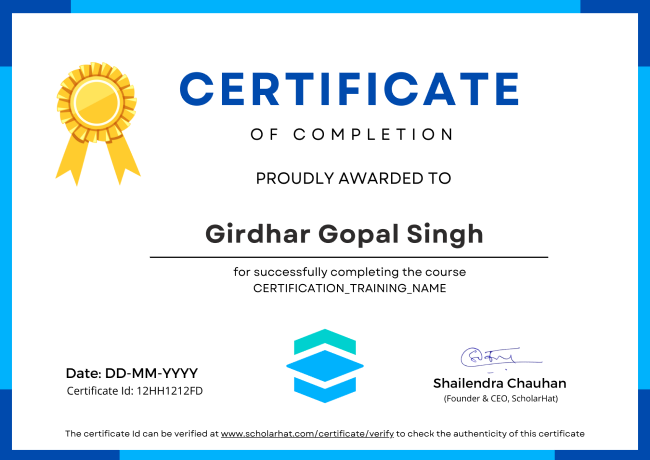
      Python For Data Science and AI/ML Certification

      What will you learn in this Python for Data Science and AI/ML Certification Training?

      What are the objectives of this Python for Data Science and AI/ML Certification?

      Who should take this Python for Data Science and AI/ML Certification course?

      What kind of projects are included as part of the Python for Data Science and AI/ML Certification Training?

      How does this Python for Data Science and AI/ML Certification help my career?

      How long does it take to complete the Python for Data Science and AI Certification Training?

      Is Python for Data Science and AI Certification worth it?

      Frequently Asked Questions

      Q1. Can I Attend a Demo Session before Enrolment?
      Yes, you can Attend a Demo Session before Enrolment in angular certification course. It gives you the opportunity to assess whether the training program aligns with your learning objectives. So, don't hesitate! Take advantage of this opportunity and attend a demo session before making your decision.
      Q2. Can I request for a support session if I need to better understand the topics?
      Yes, of course you can request for a support session if you need to better understand the topics. For that, you need to be in touch with the counsellor. Contact on +91- 999 9123 502 or you can mail us at hello@scholarhat.com
      Q3. Who are your mentors?
      All our mentors are highly qualified and experience professionals. All have at least 8-10 yrs of development experience in various technologies and are trained by ScholarHat to deliver interactive training to the participants.
      Q4. What If I miss my online training class?
      All online training classes are recorded. You will get the recorded sessions so that you can watch the online classes when you want. Also, you can join other class to do your missing classes.
      Q5. Can I share my course with someone else?
      In short, no. Check our licensing that you agree to by using ScholarHat LMS. We track this stuff, any abuse of copyright is taken seriously. Thanks for your understanding on this one.
      Q6. Do you provide any course material or live session videos?
      Yes we do. You will get access to the entire content including class videos, mockups, and assignments through LMS.
      Q7. Do you provide training on latest technology version?
      Yes we do. As the technology upgrades we do update our content and provide your training on latest version of that technology.
      Q8. Do you prepare me for the job interview?
      Yes, we do. We will discuss all possible technical interview questions and answers during the training program so that you can prepare yourself for interview.
      Q9. Will I get placement assistance after receiving my course completion certificate?
      Yes, you’ll get placement assistance after receiving your course completion certificate. The placement assistance provided by the US will guide you through the job search process, help you polish your resume, and connect you with potential employers. For that, you need to be in touch with the counsellor. Contact on +91- 999 9123 502 or you can mail us at hello@scholarhat.com
      Still have some questions? Let's discuss.
      CONTACT US