

Agentic AI is changing how customer experience works by creating intelligent systems that can act, decide, and respond like real human agents. It helps businesses provide support that feels natural and fast, making interactions smoother for every customer touchpoint.With Agentic AI, companies can deliver proactive support by predicting customer needs even before they ask. It also enables hyper-personalization, where every message, suggestion, or solution feels tailor-made for each customer. This leads to a new CX era where AI doesn’t just answer queries but provides autonomous problem resolution with smart decision-making.
In this Agentic AI tutorial, you’ll understand how autonomous systems can transform customer service teams, reduce manual work, and boost customer satisfaction with real-time, human-like engagement. These capabilities allow businesses to grow faster with intelligent automation and meaningful interactions.
Ready to unlock the future ofcustomer experience with Agentic AI? Let’s dive in and explore how it reshapes support, efficiency, and overall business success.
What is Agentic AI?
Agentic AI refers to autonomous artificial intelligence systems that can make decisions, take actions, and learn from every interaction without needing constant human control. These systems work far beyond simple chatbots or rule-based automation because they use advanced reasoning, real-time data analysis, and continuous learning to understand and respond like a human.
In customer service, Agentic AI can interpret a customer’s intent, understand their sentiment, and even predict what they need before they ask. This helps businesses offer proactive support by solving issues early, guiding customers better, and improving the overall experience with fast, accurate, and human-like engagement.
| Read More: Agents in AI |
Why CX Needs Agentic AI?
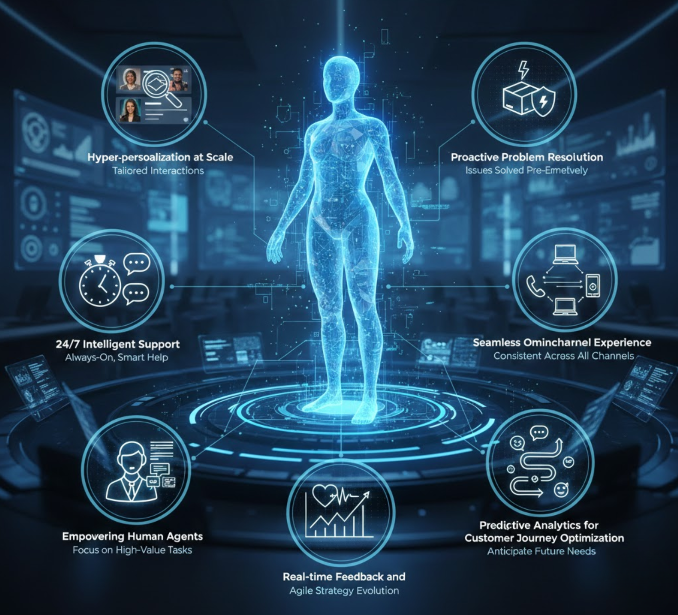
Customer expectations are increasing faster than traditional support teams can manage, and people now expect instant, personalized, and frictionless experiences across every channel. Agentic AI represents the next major leap in CX by going beyond static chatbots and enabling intelligent agents that understand context, make decisions, and take autonomous actions for both customers and businesses.
What Is Agentic AI in Customer Experience?
Agentic AI refers to goal-driven AI systems capable of planning, reasoning, and acting autonomously to achieve specific outcomes like resolving support tickets or retaining at-risk customers. In CX, agentic AI goes beyond answering FAQs by reading data across CRM, order systems, and knowledge bases, then deciding the best next action and executing it in real time.
From Automation to Autonomy: How Agentic AI Differs from Traditional CX Tools
Traditional chatbots and automation tools are reactive and follow predefined rules, responding only when prompted. Agentic AI uses LLMs, NLU, and reasoning engines to interpret intent, manage multi-turn conversations, and autonomously complete actions like refunds, reschedules, and escalations without human intervention.
Core Capabilities of Agentic AI in CX
Agentic AI can deeply understand customer intent by analyzing language, tone, and context across chat, email, and voice. These systems can also execute multi-step workflows, monitor sentiment in real time, and continuously learn from every interaction to improve decision-making and personalization.
Key capabilities include:
- Advanced intent understanding beyond keywords using LLMs and NLU.
- Real-time sentiment analysis to detect frustration, urgency, or delight.
- Autonomous workflow execution for returns, refunds, reschedules, and plan upgrades.
- Continuous learning from historical and live interaction data.
Emotional Intelligence and Empathy in Agentic AI
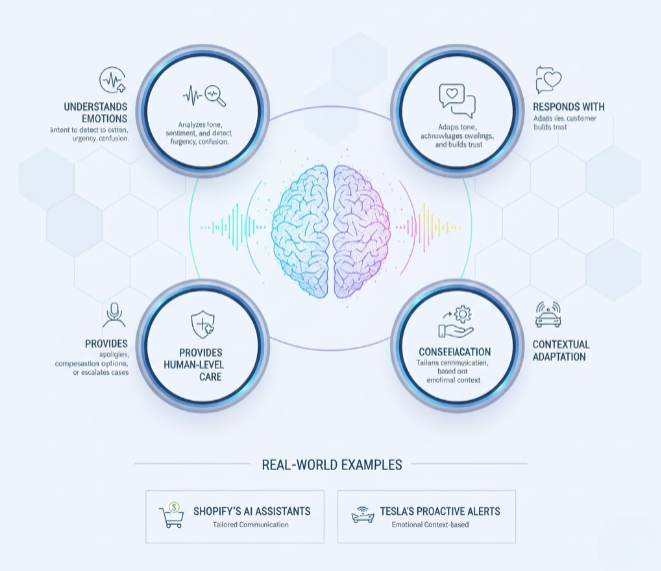
Agentic AI brings human-like emotional understanding to customer interactions by analyzing tone, sentiment, and intent to deliver responses that feel empathetic and natural.
- Understands emotions: Uses sentiment and tone analysis to detect frustration, urgency, or confusion.
- Responds with empathy: Adapts tone, acknowledges customer feelings, and builds trust through supportive language.
- Provides human-level care: Offers sincere apologies, compensation options, or escalates cases requiring deeper emotional judgment.
- Real-world examples: Platforms like Shopify’s AI assistants and Tesla’s proactive alerts tailor communication based on emotional context.
Omnichannel Consistency and Contextual Continuity
Agentic AI ensures seamless and unified customer experiences across chat, email, voice, and social channels by carrying context across every touchpoint.
- Maintains conversation history: Remembers past messages, preferences, and interactions even across multiple platforms.
- Supports channel switching: Allows customers to move from chat to phone or email without repeating information.
- Multi-turn intelligence: Tracks sentiment changes, intent, and context across long interactions.
- Global real-world use: Siemens’ multilingual AI agents resolve IT issues, trigger workflows, and preserve context across regions and languages.
Proactive and Hyper-Personalized Customer Experiences
Agentic AI empowers brands to shift from reactive support to proactive and even anticipatory experiences. For example, the system can detect delivery delays, payment failures, or churn indicators, then automatically notify customers, offer solutions, and update backend systems before complaints occur.
Using unified customer profiles, agentic AI delivers hyper-personalized messages, recommendations, and solutions based on preferences, behavior, and past interactions. This transforms generic interactions into contextual journeys that increase satisfaction, loyalty, and lifetime value.
Real-World Use Cases of Agentic AI in Customer Experience
- Autonomous customer support: Handling password resets, returns, subscription changes, and order status end-to-end.
- Proactive incident management: Identifying service outages and informing affected customers with solutions and compensation.
- Intelligent sales assistance: Qualifying leads, answering product queries, and handing off sales-ready prospects to human reps.
- Post-purchase engagement: Sending personalized tips, cross-sell suggestions, and renewal reminders based on sentiment and usage.
Business Benefits: Why Agentic AI Is a CX Game-Changer?
Agentic AI reshapes customer experience by automating repetitive tasks, improving response quality, and enabling data-driven insights that help businesses operate faster, smarter, and more efficiently.
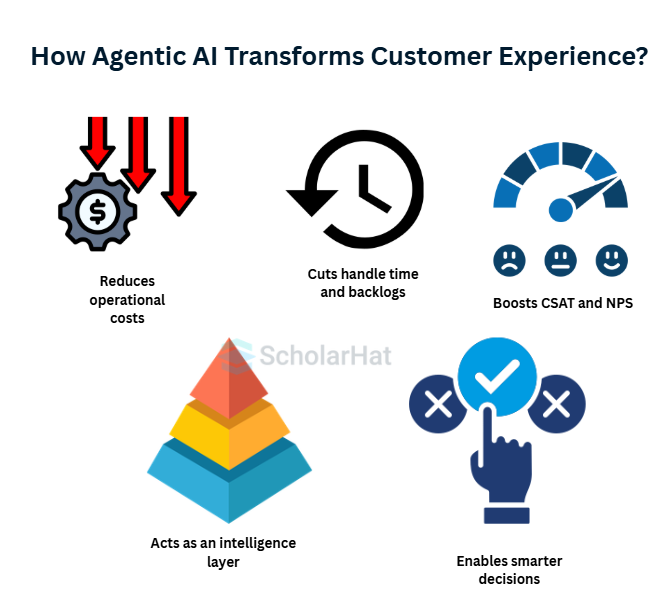
How Agentic AI Transforms Customer Experience?
- Reduces operational costs: Automates high-volume, repetitive interactions and lowers manual workload.
- Cuts handle time and backlogs: Resolves common issues instantly, improving speed and reducing delays.
- Boosts CSAT and NPS: Provides consistent, context-aware responses that feel more human and personalized.
- Acts as an intelligence layer: Identifies behavioral patterns and insights that enhance customer journeys.
- Enables smarter decisions: Supports leaders with real-time data and recommendations for better CX strategies.
Human-AI Collaboration: Redefining CX Teams
Agentic AI does not replace human agents; it elevates their roles. Routine queries are handled autonomously, while complex or emotionally sensitive scenarios are routed to human experts along with full context and recommended actions.
This reduces burnout, enables smaller teams to manage higher volumes, and frees agents to focus on relationship-building rather than repetitive tasks. Many CX teams are now hiring for skills like journey design, AI coaching, and insight interpretation.
Challenges, Risks, and Ethical Considerations
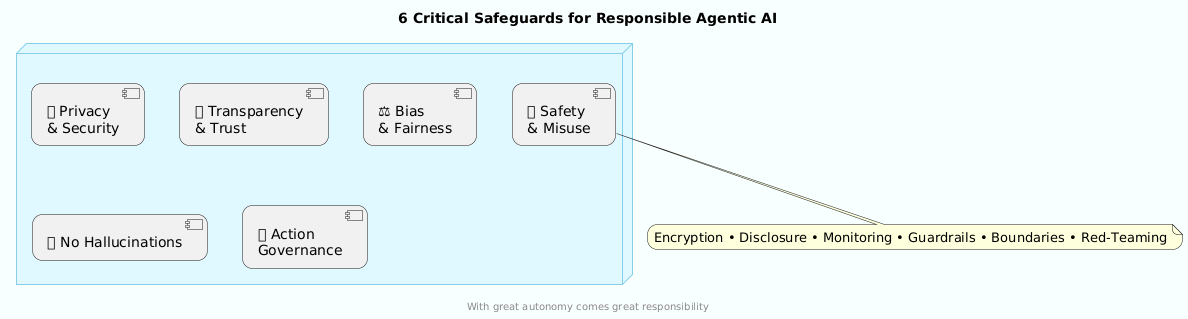
Implementing agentic AI in customer experience requires strong governance, transparent communication, and strict data protection to ensure safety, trust, and responsible automation.
Key Challenges and Ethical Risks
- Data privacy and security: Requires strong safeguards like encryption, role-based access, and audit logs to protect sensitive customer information.
- Transparency and trust: Customers must clearly know when they are interacting with AI and have easy ways to escalate to human agents.
- Bias and fairness: Continuous monitoring is needed to prevent biased decisions, unfair outcomes, or discriminatory patterns.
- Hallucinations and inaccuracies: Agentic AI may generate incorrect or harmful responses without proper guardrails and validation mechanisms.
- Action governance: Clear rules must define which tasks AI can autonomously perform, especially when dealing with billing, refunds, or account operations.
- Safety and misuse prevention: Regular testing and ethical oversight help avoid unintended actions or risky automated decisions.
Implementation Roadmap: How to Get Started with Agentic AI in CX?
Start by identifying high-volume, well-defined use cases such as order tracking or account updates. Pilot agentic AI in a controlled environment, track metrics like resolution time and CSAT, then scale to more complex workflows as the system matures.
A practical roadmap includes:
- CX and data audit to map journeys, touchpoints, and system integrations.
- Selecting the right AI platform and integrating it with CRM, ticketing, and knowledge bases.
- Defining guardrails, escalation rules, and KPIs like CSAT, FCR, and containment rate.
- Continuous optimization using real interaction data, feedback loops, and retraining.
Future of Agentic AI in Customer Experience
Agentic AI is set to redefine how businesses support customers by blending human-like intelligence with autonomous decision-making, creating experiences that feel natural, proactive, and effortless.
What the Future Looks Like?
- Blurring human–AI boundaries: Agents will gain richer memory, reasoning, and collaboration skills, making interactions feel increasingly human-like.
- Proactive customer journeys: CX will shift from “we heard you” to “we fixed it before you felt it,” enabling anticipatory service at scale.
- Industry-wide adoption: Telecom, banking, e-commerce, and healthcare will lead the way as agentic AI handles onboarding, troubleshooting, retention, and renewals.
- Competitive advantage for early adopters: Brands with responsible, well-governed AI systems will deliver faster, more empathetic, and personalized experiences.
- Higher customer loyalty: Human-like support and proactive engagement will create trust and long-term customer relationships.
Summary
Agentic AI is transforming customer experience by enabling intelligent, autonomous systems that understand intent, predict needs, and resolve issues proactively. It delivers hyper-personalized and emotionally aware interactions across every channel, leading to faster resolutions, reduced costs, and higher customer satisfaction. This technology marks a new era of seamless and human-like CX.
Don’t get left behind. Agentic AI is now the most in-demand skill employers are looking for, and the best time to upskill is today. Become a Certified Agentic AI Engineer with real-world, job-focused training. Start your journey with ScholarHat’s Azure AI & ML Job-Oriented Certification Training and unlock high-paying career opportunities in AI and cloud.